30541-100 Ave. Acheson, AB.

Head Office: Edmonton, Alberta Canada

info@NERglobal.com

Business Hrs. 08:00-18:00 MST

Tel: 1.888.960.8222

International Toll Free

Remediation Revolution: Transforming Communities Empowering Communities |

Tell Us Your Challenge.

Edit Template

Advanced Contaminant Distribution Mapping Technologies

Home > Services

IN-Situ Services

Contact Info

Nelson Environmental Remediation is a Global company head-quartered in Canada. 

Contact our main office below to be directed to the office nearest you.

1.888.960.8222

Local Canada Office: 1.780.960.3660

Info File

Company Info
Lorem Ipsum is simply dumy text of the printing typesetting industry lorem ipsum.
Download PDF
Lorem Ipsum is simply dumy text of the printing typesetting industry lorem ipsum.

High-Resolution Site Characterization

The equipment and techniques that we use to delineate contaminants and develop treatment plans.

Laser Induced Fluorescence (LIF)

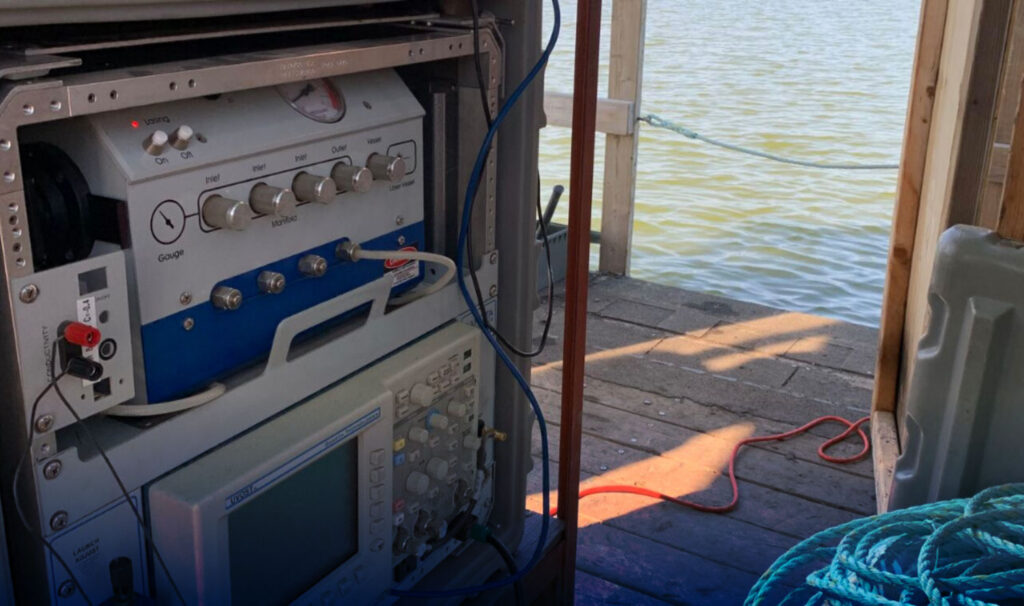
Laser Induced Fluorescence (LIF), delivered via an Ultraviolet Optical Screening Tool (UVOST®) allows for the subsurface delineation of light non-aqueous phase liquids (LNAPLs).

The UVOST® distinguishes molecules found in LNAPLs, like petroleum-based fuels and oils (i.e. gasoline, kerosene, fuel oil, etc.) by assessing fluorescence intensity, wave spectrum, and time decay of these polycyclic aromatic hydrocarbons (PAH’s) fluorescence return signals.

Effective Media:  Soil
Targeted contaminants:  Hydrocarbons

In-Situ Remediation


NELSON In-situ remediation refers to environmental remediation techniques used to treat contaminants directly at their original location without excavating or removing the polluted material. Instead of physically transporting contaminated soil or groundwater off-site, in-situ methods address the problem right where it exists.

How Is This Done?


This approach often involves injecting chemical or biological agents into the ground to neutralize contaminants, rendering them harmless. After treatment, the residuals remain in place without posing a risk to the environment or public health.

Applications Across Various Industries


Our in-situ remediation services are adaptable to a wide range of industries facing unique environmental challenges. By utilizing advanced techniques and technologies, we provide effective solutions that minimize disruption and costs while ensuring compliance with environmental regulations  

Remediation Sectors


Complete hydrogeological and contaminant distribution understanding, translated into on-target remedial needs for every industry’s project success.

Our Chemical Injection Techniques

Custom tailored injection solutions designed to meet your cycles, reducing risk and liability.

In-Situ Chemical Oxidation (ISCO)

We employ in-situ chemical oxidation (ISCO) by injecting oxidants like permanganate, persulfate, or hydrogen peroxide into the subsurface. This process breaks down a wide range of contaminants, including chlorinated solvents and petroleum hydrocarbons. Selecting the appropriate oxidant is crucial, as not all compounds respond equally to every oxidant. Our experts tailor the oxidant choice to specific site conditions and contaminants.

Carbon Injection and Permeable Reactive Barriers (PRB)

Ideal for treating dissolved-phase plumes from petroleum hydrocarbons or chlorinated sources, our carbon injection services use colloidal and non-colloidal carbon amendments. By forming a permeable reactive barrier (PRB), we “trap and treat” contaminants, allowing them to break down over time. The barrier is strategically placed downgradient of the contamination source, aligning with groundwater flow for maximum efficiency.

Biochemical Injection and Enhanced Bioremediation

Our biochemical injection involves introducing cultured microorganisms and nutrients into the contaminated environment to enhance bioremediation. This method promotes the propagation of bacteria that naturally degrade pollutants. Often utilized alongside carbon barriers and nutrient loading, success is measured through pre- and post-injection analytics and ongoing monitoring of contaminant levels.

In-Situ Chemical Reduction (ISCR)

Utilizing in-situ chemical reduction (ISCR), we deploy chemical reductants such as zero-valent iron or proprietary materials to transform contaminants through abiotic reactions. Effective for treating chlorinated compounds and halogenated dense non-aqueous phase liquids (DNAPLs), ISCR addresses both soil and groundwater contamination comprehensively.

Polycyclic Aromatic Hydrocarbons (PAH)

LIF response varies according to PAH concentration and composition. These properties, including the fluorescent nature of the compounds allow the UVOST® to provide both qualitative and semi-quantitative data.

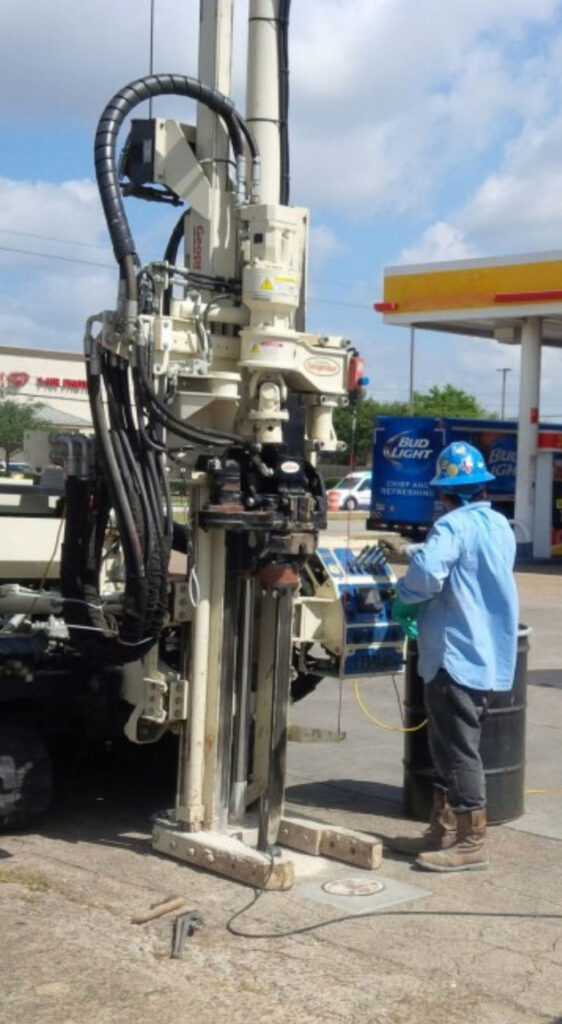
Using direct push drill rigs (i.e. Geoprobe) the UVOST’s rugged design and tooling has the capacity of reading and logging 100 – 150+ m per day, making it an effective tool for identifying and delineating petroleum NAPL.

High-resolution data (1 – 2 cm resolution with a 2 cm/sec push rate) is available in real-time on logs plotting fluorescence response vs depth, allowing for immediate site-specific decision-making, while in the field.

MiPHT

The MiHPT system is a combined unit that includes the Membrane Interface Probe (MIP) and Hydraulic Profiling Tool (HPT). These technologies can delineate petroleum and chlorinated volatile contaminants, as well as record hydrogeological conditions in-situ. Contaminant and hydrostratigraphic data can then be modeled to create a better understaning of subsurface dynamics.

Membrane Interface Probe:

The MIP is a rapid screening tool designed to log the relative concentrations of volatile organic compounds (VOCs) vertically in the subsurface. The probe is directly pushed, or percussion hammered into the subsurface. Downhole, a heater block, and a semi-permeable membrane are used in conjunction with an inert carrier gas to transport the contaminants encountered to the above-ground sensing equipment. The MIP uses a photoionization detector (PID), a flame ionization detector (FID), and a halogen-specific detector (XSD) to differentiate those compounds and measure their relative concentrations. This screening provides a robust spatial understanding of the distribution of dissolved, vapour, and sorbed phase volatile contaminants.

Effective Media:  Soil & Groundwater
Targeted contaminants:  Volatile Organic Compounds (VOCs) & petroleum products

Effective Removal of Soil Contamination

When assessing SVE applicability at a site, optimal contaminants are generally volatile and easily degraded chemicals such as benzene. Once removed from the subsurface, these contaminants are treated using an oxidizer or vapour phase carbon. SVE is not applicable for contaminants located below the groundwater table, and SVE systems have limited success on contaminants present in the capillary zone. This is due to the nature of vacuum extraction technologies and their tendency to mound the water table during recovery.

SVE can be used in a variety of soil types, with more porous and permeable soils being more effective to treat due to increased airflow through these layers. Additional processes such as air sparging or thermal enhancements can also increase contaminant recovery.

Soil Vapour Extraction (SVE) remains a cost-effective solution for in-situ treatment if contaminants of concern are, volatile/semi-volatile, and are located in the vadose zone.

Air Sparging

Hydraulic Profile Tool (HPT)

The hydraulic profiling tool is a powerful technology designed to assess hydrostratigraphic conditions of the subsurface. As the probe is advanced via direct push or percussion hammer, water is injected at a known pressure into the subsurface. This injection pressure correlates with the permeability of the subsurface strata enabling mapping of different structures and contaminant pathways. The probe can also be utilized to measure hydrostatic pressure to estimate the water table surface hydraulic conductivity in the saturated zone.

This technology provides critical information for identifying potential zones of mass flux and contaminant transport in high resolution.
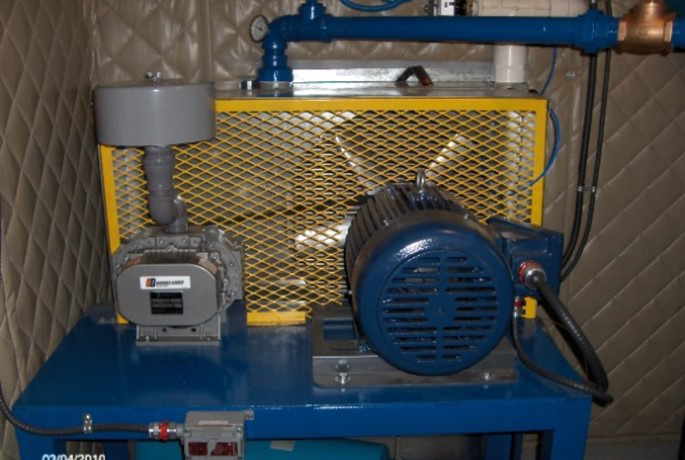
Air sparging involves injecting air into contaminated groundwater to drive Volatile Organic Compounds (VOCs) into the vadose zone through a process known as volatilization. In addition to this process, air sparging also increases bio-augmentation within the impacted areas enhancing bacterial cultures and increasing the rate of degradation of a contaminant. SVE is conducted in unison with air sparging to remove VOCs from the subsurface.

Thermal enhancement has also proven an effective method for increasing the mobilization of certain contaminants. SCG has successfully utilized heat from post-treatment exhaust streams to be re-injected back into the subsurface. This process has shown to be an effective means to increase mass recovery and decrease project timelines.

Remediation is a term that has a number of different uses. Our remediation work involves soil, groundwater, and water that has been contaminated with compounds found in various industrial applications.

Disaster remediation refers to acute cases of catastrophic damage or loss that need intervention to rectify – often involving people’s homes & personal property.

Environmental remediation (what we do) is used to help critical industries minimize, optimize, and reverse their environmental impact.

Effectively removing contamination from the subsurface requires the right approach. Our remediation technologies remove hydrocarbons like oil and fuel (Light Non-Aqueous Phase Liquids or LNAPLs), Volatile Organic Compounds (VOCs), industrial solvents, and common by-products of many industrial processes. Not sure if Nelson Water can help?

Our teams are based in New Brunswick, Ontario, and Alberta – but we serve our clients across North America. If you’re in Canada or the U.S. and have industrial contamination to tackle, SCG can help.

NELSON has been recognized as a leader in the environmental industry for its ability to complete some of the largest soil remediation projects worldwide.

1.888.960.8222

International Toll Free Support

Company

Privacy Policy

Terms and Conditions

Copyright Notice

Newsletter

Stay up-to-date on the latest news and technologies in Global Remediation.

You have been successfully Subscribed! Ops! Something went wrong, please try again.

30541-100 Ave. Acheson, AB. Canada T7X 6L8 

© 2025 Nelson Environmental Remediation.